“For the past two summers, our organization has stepped in with our own summer cash program to fill the gap. We provided direct cash assistance to families, trusting them to make the best choices for their children.
The results speak for themselves: More than 85 percent of families reported no barriers to accessing enough food, and nearly as many said they were able to buy more protein, fresh fruit and vegetables than ever before.
We’ve shown that this model works. All it would take for Mississippi to extend that success statewide is a governor’s yes, a simple decision to opt into a federal program that would cost the state next to nothing in administrative funds. Yet again this year, Gov. Reeves declined, insisting that summer feeding sites and existing benefits are enough. Families have told us, loud and clear, that they are not.” – Sarah Stripp
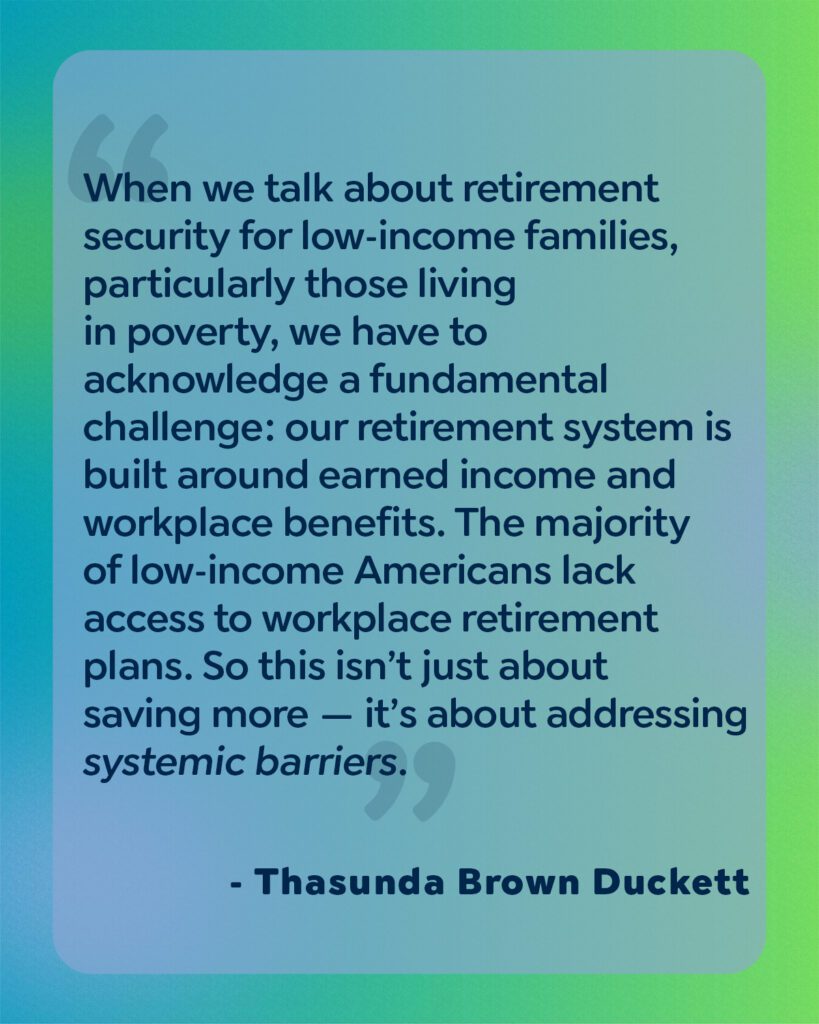
When it comes to building wealth and security in America, too many families — especially those living paycheck to paycheck — are left out of the conversation. For low-income households, retirement planning often feels like a distant luxury, and the pathways to financial empowerment can seem inaccessible. In this candid Forbes Q&A, I speak to Thasunda Brown Duckett, President and CEO of TIAA and one of just two Black women to helm a Fortune 500 company currently, to discuss the systemic barriers that keep millions from building a secure future and to share actionable strategies for closing the retirement gap. Our conversation offers insights and practical advice for individuals, organizations, and policymakers committed to making retirement security a reality for all Americans.
The proposed cuts in the “Big, Beautiful Bill” making its ways through Congress would increase hunger, force more families to food pantries, and hurt local economies.
We asked some of our moms in The Magnolia Mother’s Trust to weigh in. Take a listen!
Jackson, Mississippi is officially in full summer mode! Not only has the heat and humidity crept back up into sweat-drenching territory, but schools have had their last days, graduations have wrapped up, and parents are desperately trying to figure out the extra expenses (like food and childcare) that come along with the summer months.
Earlier this year, we announced that, in response to Mississippi’s failure to opt-in to the new federal Summer EBT program for families, we would be providing cash disbursements to Springboard families to support the additional food costs families have during the summer. This Tuesday, we will be sending out the first disbursements. Part of our commitment in our new strategic plan is to expand our cash disbursement support in response to unexpected disasters – including policy disasters like failing to implement Summer EBT.
While we are thrilled to be helping almost 700 students have an additional layer of food security this summer, we know this is just a drop in the bucket compared to the children across Mississippi (and the other states that opted out of Summer EBT benefits) who will not have access to additional benefits this summer. That’s why we’re doing more than just giving out cash; we’re also collecting data.
It is our belief that the best policies are always grounded in trust and dignity and informed by family voice and expertise. When polled, 75% of our families reported not having sufficient food for their family’s needs during the summer months. Many state leaders who opted-out of Summer EBT claimed that families already had access to summer feeding sites, so additional benefits were unnecessary. But only 14% of Springboard families actually reported having used summer feeding sites. The inability to take children during work hours, consistent access to transportation, and insufficient information regarding site location and hours were just a few of the issues cited.
The largest percentage of families said that additional support through Pandemic EBT funds (the pandemic-era program which laid the groundwork for the new Summer EBT program) was how they met their families’ nutritional needs during the summer. Not only was it simpler than getting kids to specific places at specific times, but it provided choice and options – allowing parents to accommodate allergies, health needs, and preferences. It provides flexibility for working parents – something these same lawmakers say is a priority – and ensures children aren’t skipping or eating inadequate meals when summer sites aren’t open.
Throughout the summer, we will be capturing stories from families about how the cash is making a difference in their lives and how it shifts their ability to keep their homes stocked with enough nutritious food throughout the summer. We’ve already seen these stories and data help states like Nebraska, Louisiana, and Alabama change course and plan to opt-in to Summer EBT moving forward. We have no doubt that Mississippi can be next.