• Skip to primary navigation
  • Skip to main content
Springboard to Opportunities

Springboard to Opportunities

  • About Us
    • Mission
    • Theory of Change
    • Who We Are
    • Holistic Prosperity
    • Leadership
  • Residents & Partnerships
    • Who We Work With
    • Resident Relationships
  • Socioeconomic Well-being
    • Guaranteed Income
    • Emergency Cash Disbursement
    • Lending Circles
  • Policy Priorities
    • Policy Advocacy
    • Childcare Assistance
    • Child Tax Credit
    • Earned Income Tax Credit
    • Guaranteed Income
    • Temporary Assistance
  • Fellowships
  • Stories
    • Narrative Change
    • Storytelling
    • Springboard Speaks
    • Reports & Policy Briefs
Support Us

Blog

Responding to COVID-19

As I am sure all of you are aware, we are currently in unprecedented times. In the midst of a lot of chaos and unknowns, we are doing our best to plan for the future and be a support system for families residing in affordable housing. Our first priority right now is ensuring that our residents and staff are safe and have access to the resources that they need in a time where the majority of our residents do not have access to paid leave, childcare, medical care, or adequate food supplies while children are out of school.

As we have been saying for years, our social welfare system and policies surrounding low-income families have always been inadequate and problematic to say the least, and in this time of crisis, those problems are only being exasperated. Families who have been working for low wages had no opportunity to build up savings are also the ones without any access to paid leave or the ability to work at home wondering. SNAP benefits that already do not provide an adequate amount of money for monthly food bills will be even less helpful as children will now need to eat 10 more meals at home that used to be provided by school systems. Not to mention, workers who did not have the luxury of having this past weekend off will also be looking at empty grocery store shelves as they try to get what they can for their families. 

This past Friday, 80 of our mothers in Jackson received a check for $1,000 from Springboard To Opportunities as their first payment in the second iteration of The Magnolia Mother’s Trust. It is a relief to know that there are 80 mothers here who can be a little less worried about how they are going to provide for their families’ basic needs in the coming weeks and months. However, we also know that this is not enough. There are thousands of other Springboard families and millions of others nationwide in the same situation, and we cannot ignore the failings of our social policies and systems in this time to keep them safe. It is our deepest hope that when we come through to the other side of this, that we do not just return to “business as usual,” but actually take real, tangible steps to make sure all families always have access to the supports they need.

For now, as an organization, we are choosing to follow CDC guidelines and have all staff work at home until the end of March. All Community Specialists have distributed local resource guides for their communities with food, health, education, and utilities assistance information. In addition, residents have received mobile numbers for staff members and we will continue to provide mass updates to families through our Springboard App, which we have been using as a communication tool with families for the last two years. We are ensuring that even while practicing social distancing, all residents know that they have access and support from Springboard at this time.

Finally, we will continue to live out our Radically, Resident-Driven model making sure that even from a distance, we are listening to our residents and responding to their needs in every way possible. Community Specialists will be calling each resident to hear what they need, and we will be doing all we can to distribute gift cards for groceries and supplies and emergency funds to help families as we are able. 

As always, we are deeply appreciative of this community of supporters and partners that care so much about us and our families! We hope that everyone is staying safe and well and taking necessary precautions during this time.

Filed Under: Blog

2019 Year in Review

2019 was an exciting year for Springboard To Opportunities. We watched families move to home ownership, land jobs in career fields they have been working toward, speak on national stages about creating family-centered policies, apply for college, and reach hundreds of other goals they had set for themselves throughout the year. While there isn’t room in this newsletter to share all the amazing stories we heard, we wanted to provide a glimpse into what this past year has held for us.


In 2019…

2,206 

residents in affordable housing communities received direct assistance through Springboard To Opportunities’ programs and services.

Services operated in… 

10 affordable housing communities,

in 6 different cities,

across 3 states.

Education Opportunities

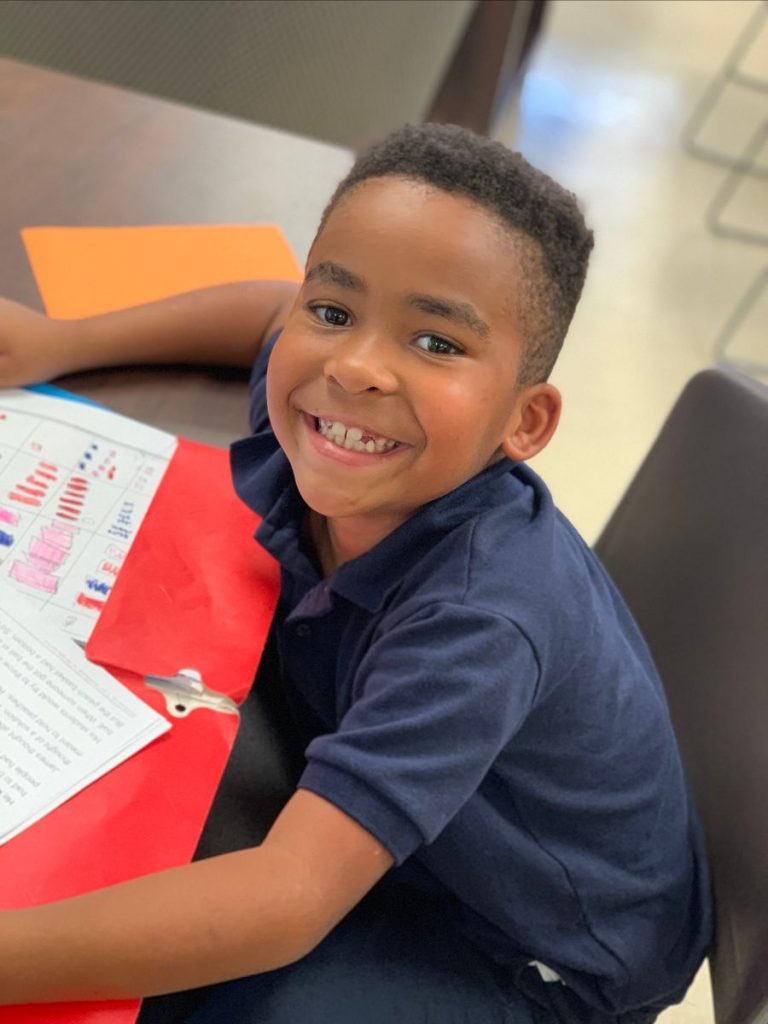
568 children participated in regularly occurring after school or summer programming.

New partnerships, including one with the Boys and Girls Club of Jackson, Mississippi, provided high-quality, after school programming to even more students.

We raised over $33,000 to seed and fund Children’s Savings Accounts through our 5K Run for Our Community and Giving Tuesday campaign.

Building Success

177 residents participated in Springboard to Success programming, helping them achieve financial and career-related goals.

We worked with the Bank On Jackson Coalition to create an accessible checking account for residents.

STO moms spoke at two national forums with Ascend at the Aspen Institute and the Ounce of Prevention Fund about the need for policy changes for family-supportive workplaces and innovative economic opportunities.

Stronger Communities

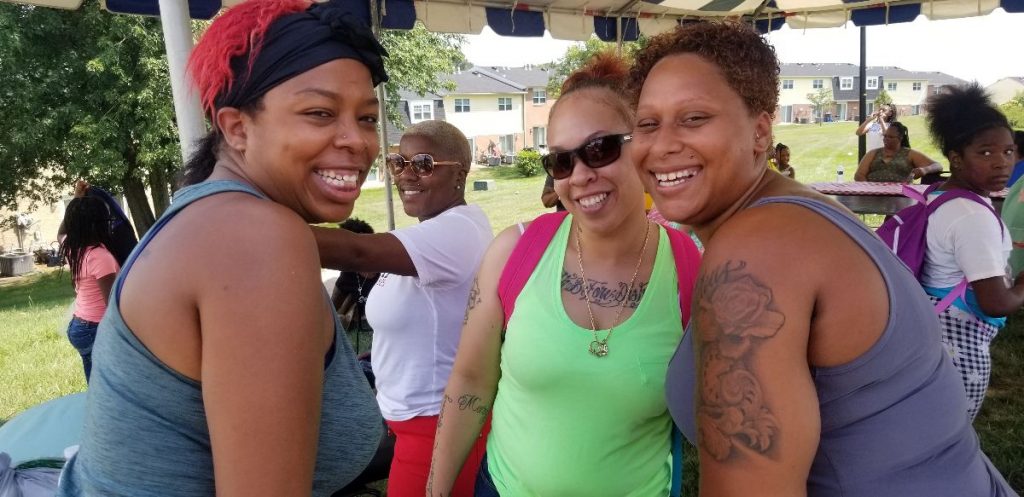
22,588 meals were served to STO families facing food insecurity.

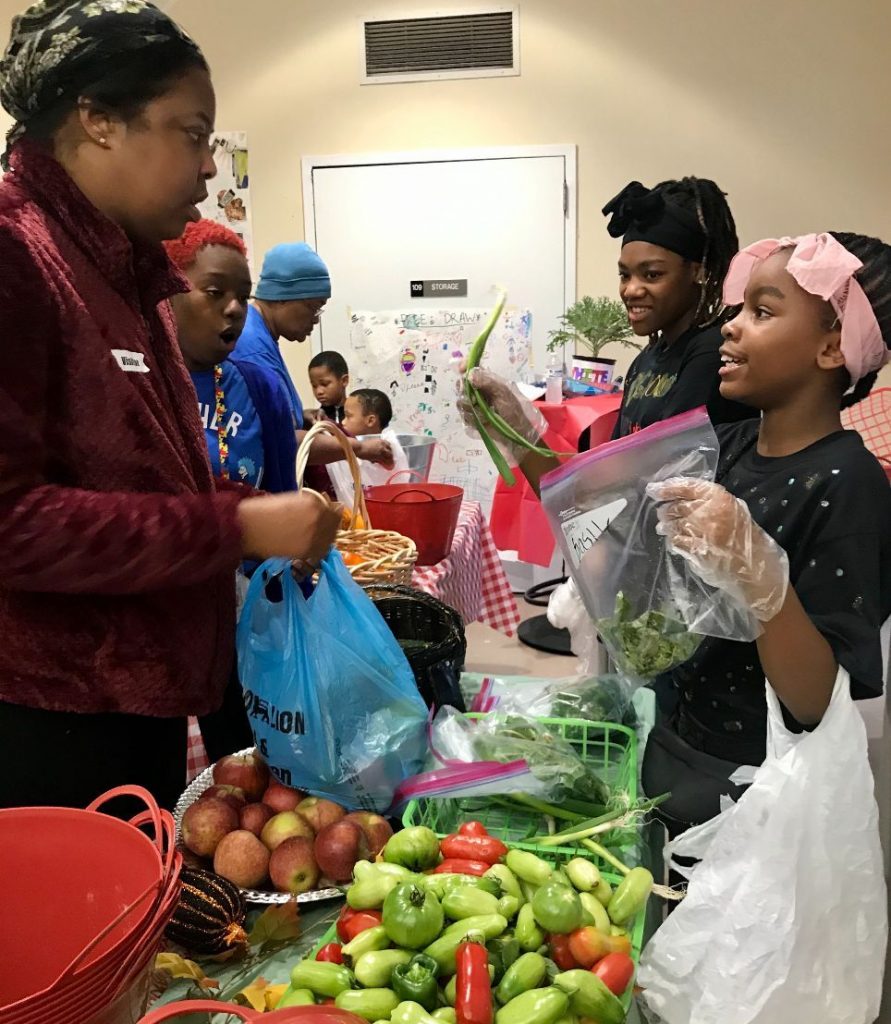
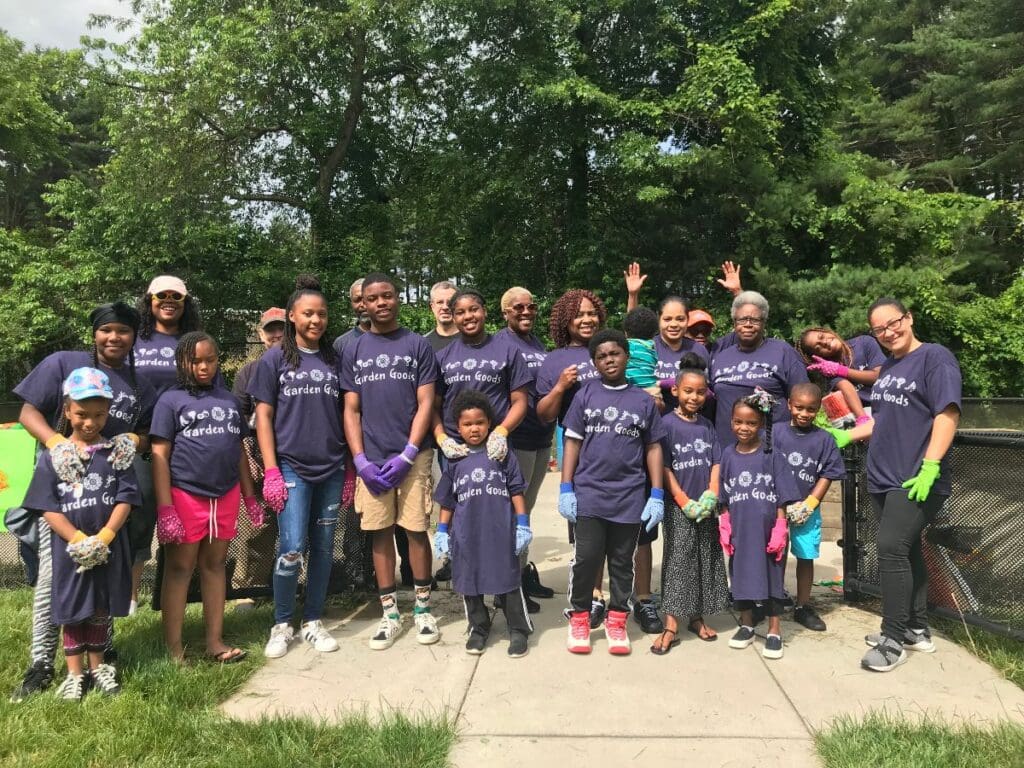
104 residents at Windsor Valley in Edgewood, Maryland helped plant, maintain, and harvest their Community Garden, a project that was created and led by middle school students who participate in Windsor Valley’s LitClub programming.

Over 60 STO resdients and other community members came together to help package items donated to children and families affected by the ICE raids that took place in August in Mississippi.

6 new Community Care Closets were established with basic need and personal care supplies in partnership with UnitedHealthcare of Mississippi.

The Magnolia Mother’s Trust

And finally, we launched our guaranteed income pilot, The Magnolia Mother’s Trust, providing 20, low-income, African American mothers with $1000 each month, no strings attached, for 12 months. We will be releasing a full data report with results from the pilot in January 2020, along with additional details about what the next iteration of the program will look like. But until then, we invite you to watch the video put together by our partners at the Economic Security Project featuring interviews with participants from our program, as well as a similar pilot currently underway in Stockton, California.

Filed Under: Blog

Mindful Inquiry for Resident Services

As you well know, our vision is that low-income families are entitled to a future not predestined by their circumstances. Beginning in May of this year, in support of this belief and the families we serve, Springboard began using Mindful Inquiry (MI) – a process in which we use the senses, memory, emotions to engage with what is currently happening with residents with the intent to gain new knowledge and create change.

Other resident services models scratch the surface of these face-to-face interactions and only exist to connect residents to resources based on their current need. However, Springboard’s team takes it a step further by not only providing the aforementioned services but also creating space and time for residents to feel comfortable sharing their hopes and dreams. Mindful Inquiry is a perfect fit for the Springboard model – and an optimal component of any resident services toolkit – as it deepens the already fruitful conversations we are having with residents.

It invokes for residents images of what could be and helps them see past their current circumstances to envision achievement of their self-identified goals and devise plans to fulfill them. Maya’s story is one example of how staff utilizes this method to help residents identify priorities and create plans for success.

Maya, who is visibly frustrated, walks into her Community Specialist’s office and has a seat. The Community Specialist stops what she’s doing and with concern asks Maya, “How are you today?” Maya with her eyes cast downward sighs deeply, shifts in her chair, and responds, “I could be better.” As the conversation continues the Community Specialist discovers that Tia feels stressed and depressed and is still searching for employment and transportation after many months while trying to care for her family.

As the Community Specialist gauges her reactions and emotions, she asks Maya’s greatest need right now. To which she replies, “Gaining employment. That’s my biggest thing right now. If I can get a job and get back working, that kinda puts everything in place where it needs to be.” Together, Maya and her Community Specialist devise a plan to refocus her resume and set a target date for each step. Ultimately, Maya leaves the office with a plan in her hand and smiling. A few weeks later and after regular progress checks with her Community Specialist, Maya comes back to report that she is employed. She is currently in the process of setting other goals for herself and her family.

This level of interaction is commonplace at Springboard To Opportunities. True, it requires a greater investment of time and resources for staff training and implementation, but we are committed to making investments that move the needle toward change and positive life outcomes, ensuring that Springboard continues to live up to its vision and mission of supporting and witnessing success for all we serve in school, work, and life.

Filed Under: Blog

When Voices are Heard

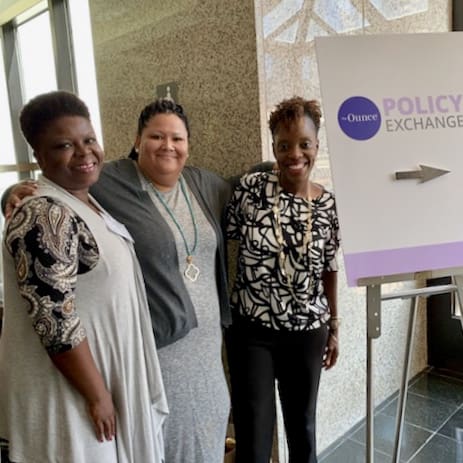
Every follower of our work knows by now how much we value the voices of low-income families, both to inform our work at Springboard To Opportunities and also in larger conversations that have the potential to shape public policy on local, state, and national levels. So when the opportunity presented itself to take two of our Springboard moms with me to the 8th Annual Ounce Policy Exchange: Unite with Children and Families in Chicago last month, I did not hesitate to say yes.

The conference focused on policy approaches to improve outcomes for young children and their families, but we, and the conveners of the conference, knew those conversations would be incomplete if the real, lived experiences of low-income families were not heard.  During the conference, Val and Ebony were given the opportunity to share with policymakers, foundation managers, and nonprofit leaders from across the country their experience of living in affordable housing and the barriers that they face daily in trying to reach their goals and create more opportunities for their families. It was a chance to take a narrative that even the most well-meaning among us often lace with assumptions and stereotypes and recenter it on the realities low-income families experience every day.

Val described watching the expressions on people’s faces change as she shared her daily experience as a single mother in low-income housing and said she felt, “we were finally being heard and taken seriously.” After their panel, Val commented that people continued to come up to her asking about issues and policy concerns that affect her family on a day-to-day basis. For Val, it was affirmation not only that her story matters, but that her opinions, experiences, and knowledge are essential to the process of making strong public policy that actually has the power to break cycles of poverty.

For Ebony, this was one of the first times where she felt not only invited to, but actually included in the conversation that was happening. “No one ever wants to hear our voice,” she said. “They just tell us what to do. They set the rules and don’t care about the impact that it has on us as families, as individuals, and as the community. It is detrimental when [policymakers and leaders] don’t hear our voices.” But this experience was different for Ebony. No one made her feel small or just “like another girl from the projects.” Instead, she found that many of the other participants were parents, just like her and wanted to create more opportunities and a prosperous future for their children, and her experience and knowledge as a mother was just as important in reaching that goal as the knowledge and experience of everyone else in the room.

Both Ebony and Val left the meeting with renewed energy and passion and both expressed a desire to continue speaking up and advocating for their communities in any way they can. I hope that more national partners will see the value of bringing the voices of families to these larger conversations, as The Ounce of Prevention Fund did, and that all the participants who were there will go back to their respective homes remembering what they heard and doing what they can to integrate those ideas and experiences into their work. And I hope Val and Ebony and all the mothers we work with on a daily basis will be reminded of the importance and value of their voices and ideas in shaping communities where all people have the ability and opportunity to flourish.

Filed Under: Blog

The Critical Middle

Summer is once again upon us and we are gearing up for a busy couple of months at Springboard. Super Summer Camp has already started in our Mississippi and Alabama communities, and as the kids finish up their last few days of school in Maryland, they are preparing for a summer of fun and learning within their communities, too. 

But even with all the excitement and energy surrounding the programs for our elementary school kids, we know there is another group that often gets left behind: middle school students. We often refer to this time in school as The Critical Middle. Academically, middle school can be a time where students’ progress can begin to slow and achievement gaps can widen, causing some children to be unprepared for high school, which can lead to higher drop out rates and low college readiness. Not to mention, middle school is a critical time for social and emotional development for students as they begin to discover who they are, grow more independent, and begin thinking about future goals and dreams for their lives.

That’s why we’re committed to making sure our middle school students are not forgotten this summer. In Maryland, our LitClub girls have been actively working on their Community Action Plan to revitalize Windsor Valley’s community garden that they created during the HerStory Summit this past fall. This past Saturday, they hosted their first ever Story Summit, a gathering of all the LitClubs within the area, to plant their garden and kick off the growing season.

Throughout the summer, they will be working with Springboard staff to maintain the garden and recruit volunteers to help care for the garden through weeding, watering, and picking vegetables as they start to grow. At the end of the summer, they will host a harvest party, celebrating their accomplishments and helping to cook some delicious food from the vegetables they grew. Not only is this project providing activities to help keep the middle school students active and engaged this summer, it is also helping them develop their leadership and critical thinking skills as they plan and run the events.

In other communities, we will be implementing our third year of PLAAY, a youth development program that uses sports as a platform to help minority youth utilize mindfulness practices and emotional honesty to deal with stressful or traumatic experiences in their own lives that can easily escalate into hostile and aggressive situations. The curriculum keeps the students academically engaged through writing prompts and discussions, while also helping students sort through social emotional development that comes during middle school and can often be even more intense for students from low-income families and students of color.

We are so excited to watch our middle school students continue to learn and develop this summer and cannot wait to share their stories and pictures with you. We are so proud of the young people they are becoming and believe they will make it through The Critical Middle years prepared and ready to achieve all of their wildest dreams.

Filed Under: Blog

What We’ve Been Learning

While we love keeping you up-to-date on all things happening at Springboard, we also know many of you are interested in hearing more about The Magnolia Mother’s Trust. It is amazing to think that at this time last year, the idea of providing a basic income to the low-income mothers we work with on a daily basis was just a dream in my mind. Now, six months into the project, we have learned so much.

Our hope was for this project to stand in direct contrast to what is currently offered by our punitive welfare system: offering breathing room instead of an immediate reduction in benefits, including families as co-designers of the project, rather than paternalistically deciding what low-income families need or deserve, and trusting these women to use the resources offered in the best way that they see fit, rather than restricting their choices through vouchers and limitations.

Now halfway through this pilot, we are already so encouraged hearing the stories our moms are telling us.  One has finally been able to pursue her GED and work toward her educational goals. Several have paid off students loans and other debts, improving their credit as they work toward larger goals of like home ownership. Others have enrolled in school and training courses as they pursue careers in fields like phlebotomy, medical billing, and social work. And one mom was simply able to take a sick day for the first time in her life without worrying about the repercussions. 

But we’re not just collecting stories; we’re also collecting data. We want to know the power providing a basic income to low-income families can have, and we want to back that up with numbers. We are working with an evaluation team to explore four big questions:

  1. Economic Security–can a basic income, not only alleviate symptoms of poverty, but actually provide a platform for exiting poverty?
  2. Community Engagement–Will a basic income give families the space and desire to become more actively engaged in their community as leaders and program participants?
  3. Self-Efficacy–Does a basic income reduce the stigma of public assistance and increase an individual’s desire to work outside the home and set goals for the future?
  4. Defining Work–Can a basic income help individuals define fulfilling works for themselves, rather than finding a job that simply satisfies work requirements?

While we work to collect this data and answer these questions, we are continuing to invest in the mothers, hosting monthly gatherings on topics of their choice, providing mental health and emotional support as they navigate the questions and transitions that come with a big life change, and connecting the moms to each other and resources in the community as they build a network of support that will continue to uplift them and propel them toward their goals even after this year is over.

We thank you for your belief in us and most importantly for your belief in these incredible 20 mothers who are a part of this.

Filed Under: Blog Tagged With: The Magnolia Mothers Trust

  • « Go to Previous Page
  • Page 1
  • Interim pages omitted …
  • Page 15
  • Page 16
  • Page 17
  • Page 18
  • Go to Next Page »

Stay connected

Subscribe for the latest Springboard news, research, policy updates, and resident stories.

Support our mission to promote holistic prosperity for all.
DONATE CONTACT RESIDENT PORTAL

#333
1220 E Northside Drive, Suite 170
Jackson, MS 39211

769-251-0924 info@springboardto.org
About Us Hiring Press & News Privacy Policy Contact